Step 1
Build the event
Create events that track everything you need in one workspace, from line items and lots to surveys and consent-tracked documents.
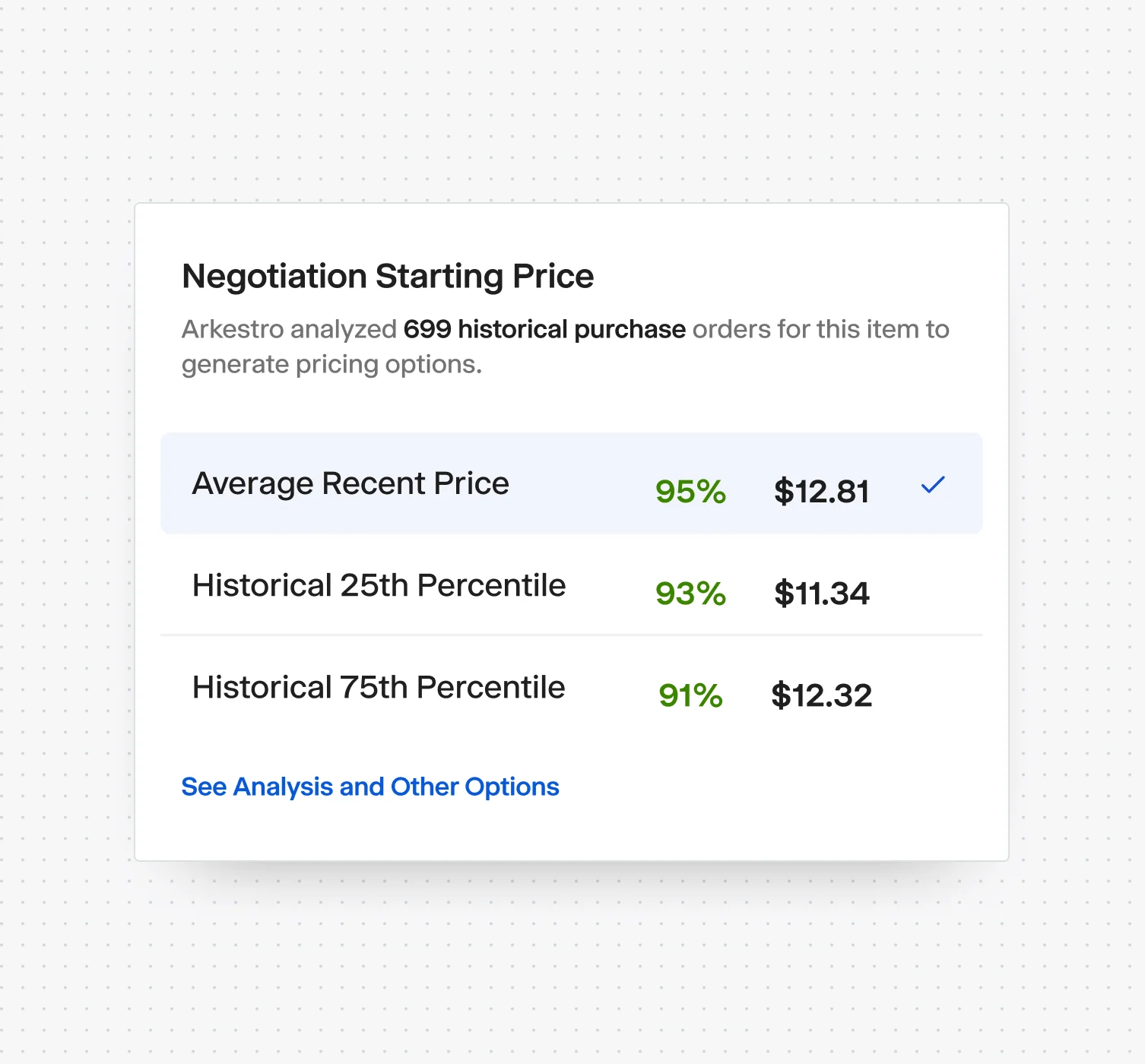
Run complex sourcing events in one structured workflow. With AI-guided pricing, intelligent counteroffers, and line-item analytics, your procurement team gets to the optimal price in a third of the time.

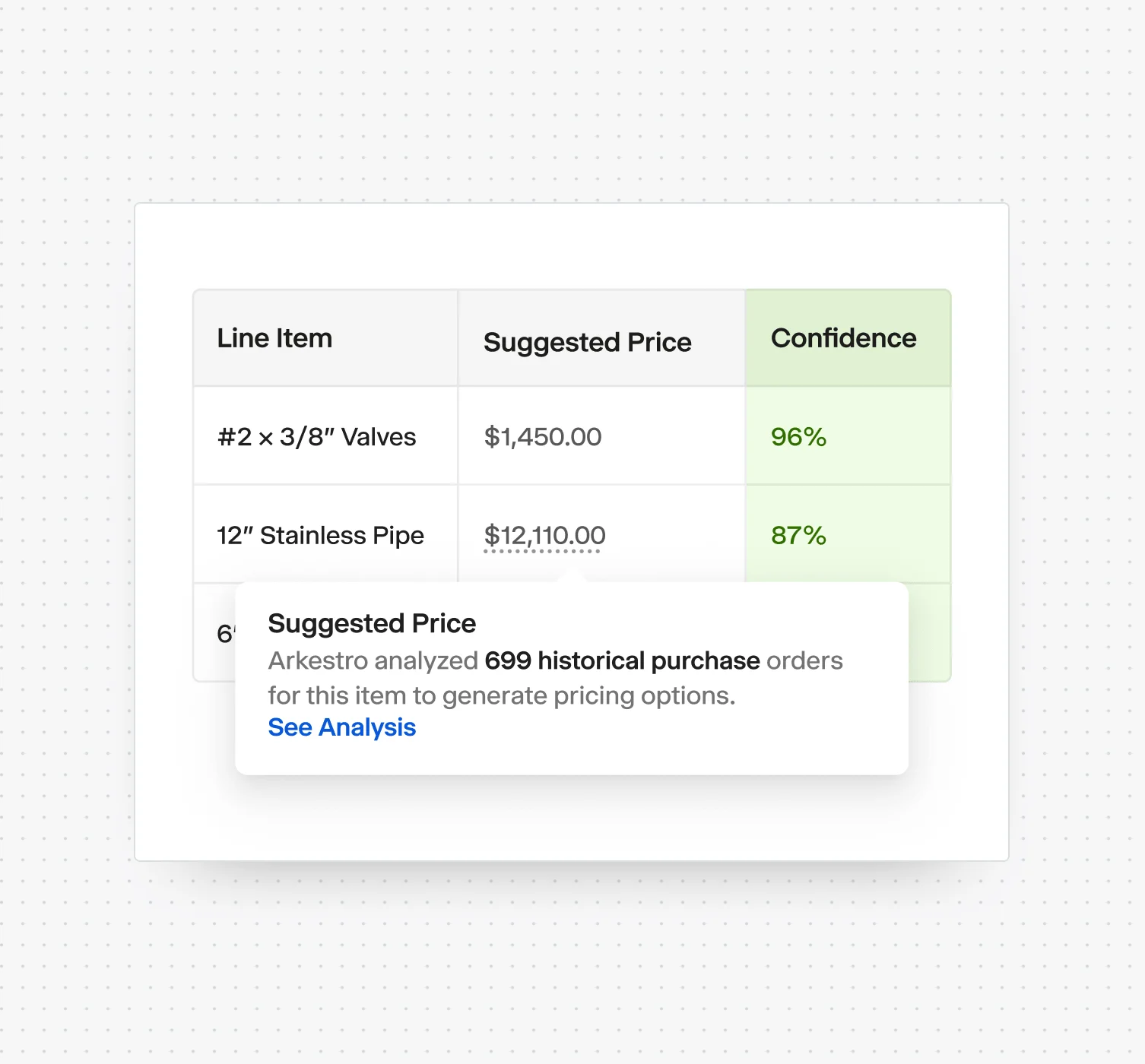
Every event opens with AI-suggested prices per line item, built from your baselines and quote history.
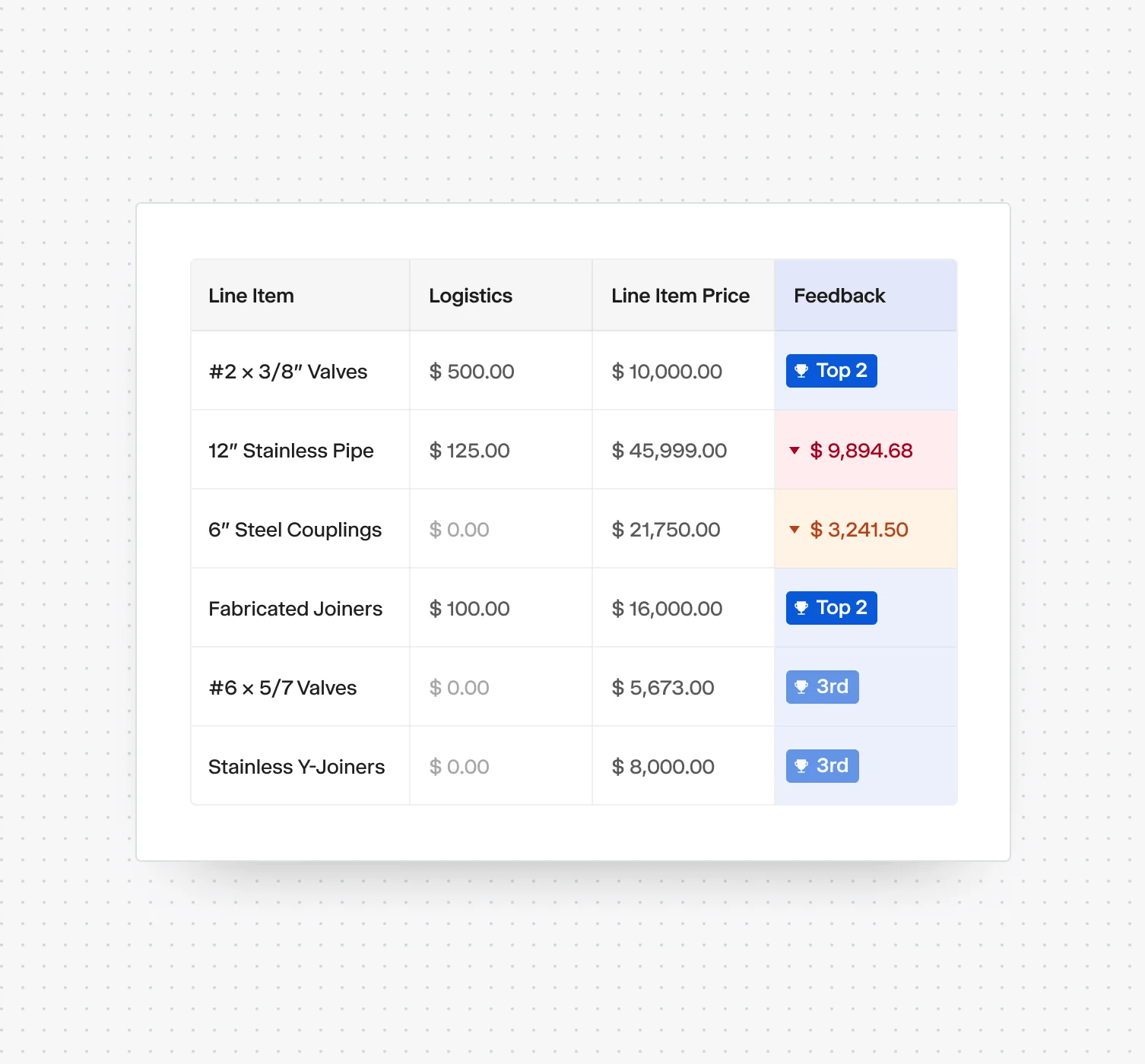
Dynamic feedback and counteroffers run automatically. Suppliers respond in a guided, portal-free flow: no logins, no chased emails, no stalled events.
Model award scenarios down to the line item, weighing value, risk, and supplier diversification before you award.
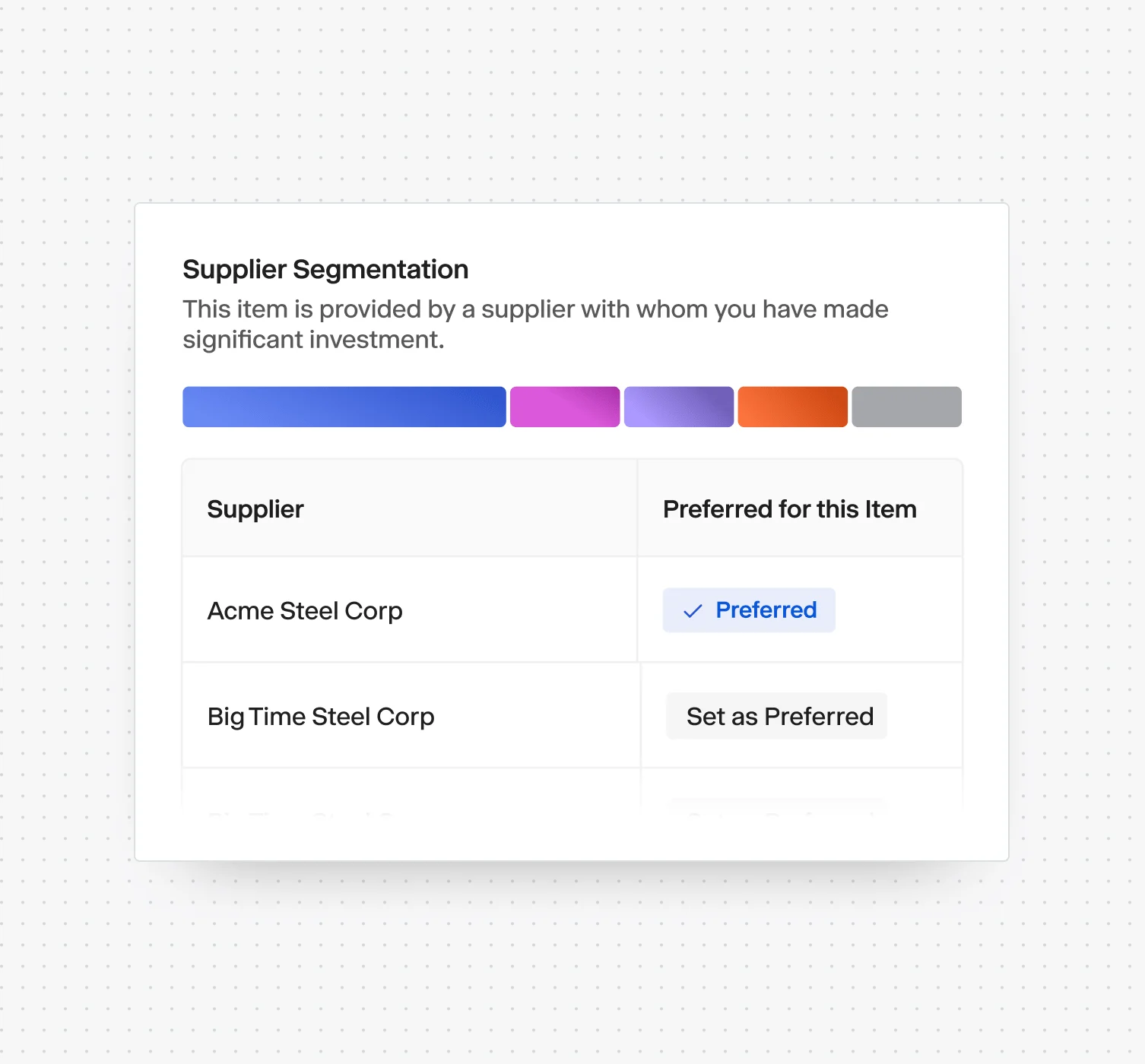
Arkestro recommends suppliers from procurement history, prior purchases, preferred status, and supply base activity based on factors such as price, history, and fit.
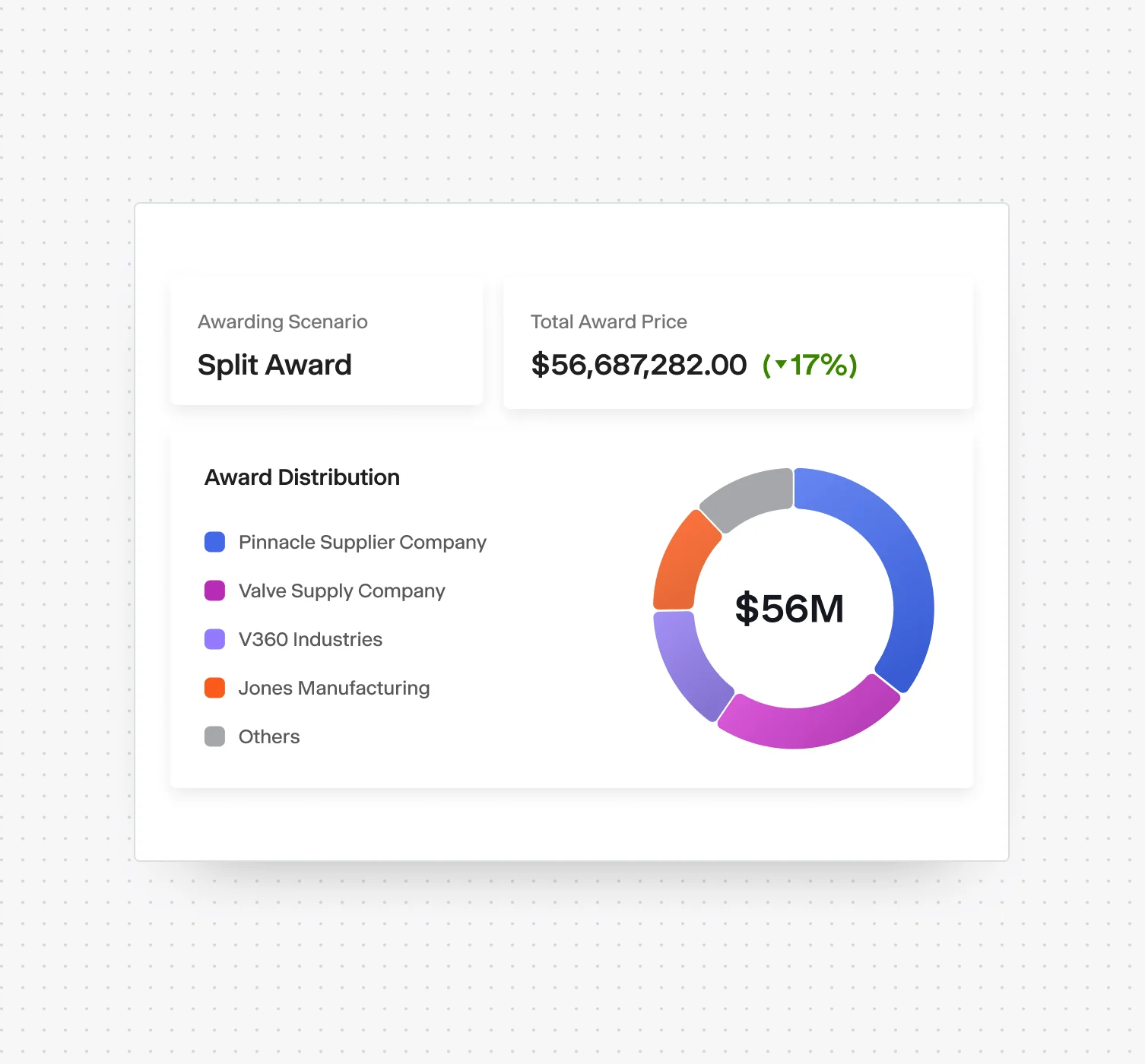
Model award scenarios by line item, add custom criteria with contributing weights, and compare award distribution across suppliers before you commit.
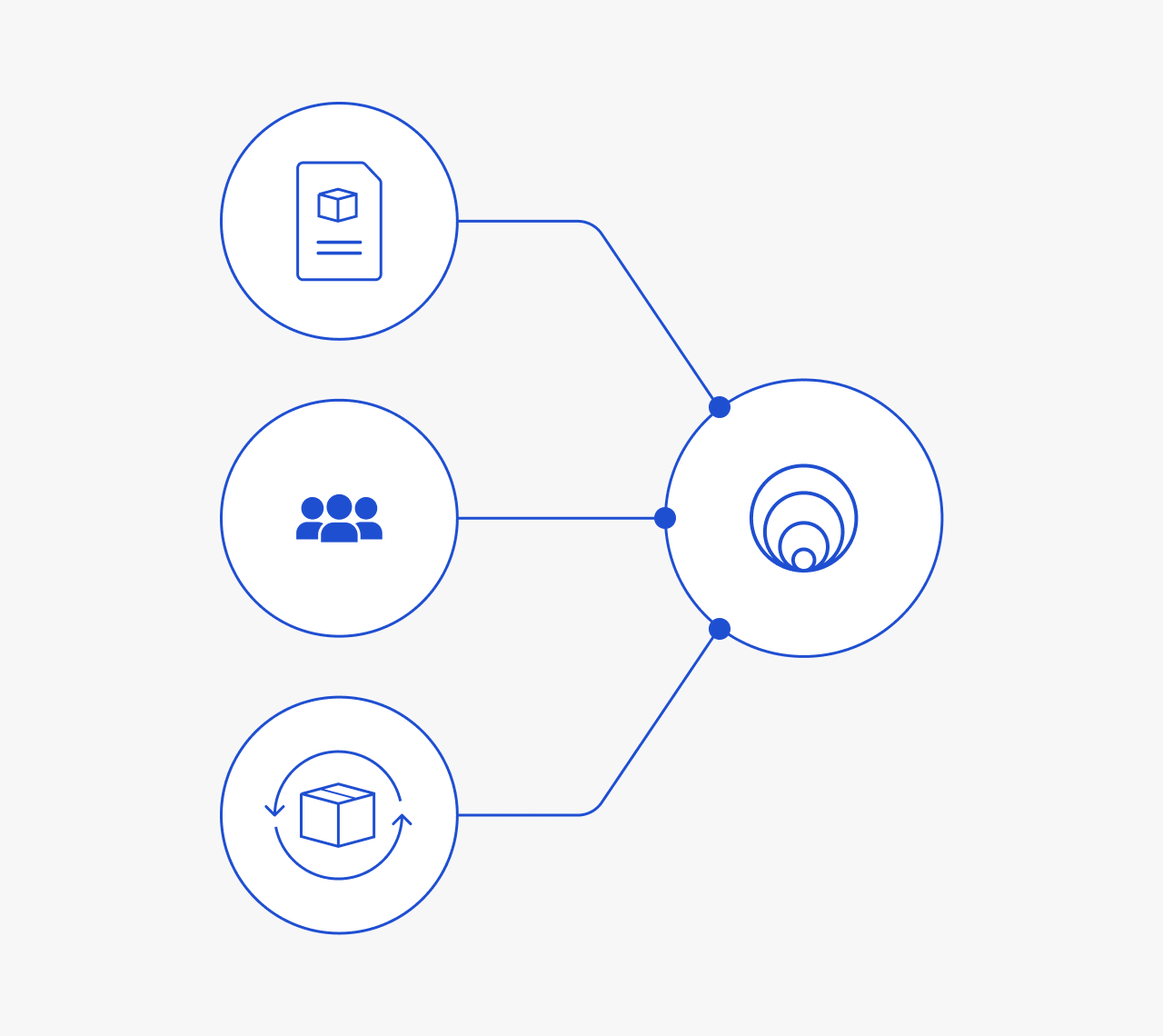
Standards, approved manufacturer lists, and model contracts ride along with the event, with supplier consent tracked document by document.
Multi-section surveys, team scoring, and structured supplier Q&A handle events where the answer matters as much as the price.
Vendor-managed replenishment and long-tail categories run in the same workflow, with suggested pricing doing the heavy lifting.
Enterprise-grade security, privacy, and AI governance are built into the platform, not bolted on. Review our controls, reports, and policies anytime.




Common questions about running predictive sourcing events in Arkestro.
Predictive sourcing uses AI to suggest a target price on every line item before suppliers quote, then guides offers toward that price while the event runs. You anchor instead of reacting.
Events handle thousands of line items with full analytics: expected coverage by supplier, quote totals by round, per-item movement, and one-click quote tabulations.
Yes. Arkestro suggests suppliers from purchase history, preferred status, and supply base activity, and shows the reason: category fit, most-used, overlapping items, or lowest price.
An RFQ collects quotes and waits. A predictive sourcing event opens with suggested prices, then uses rank feedback and intelligent counteroffers to move pricing round over round.
Customers average 18.8% savings across all categories of spend, reaching their optimal price in about a third of the time of a manual sourcing cycle.
Yes. Multi-section surveys, team scoring, and structured supplier Q&A handle events where the answer matters as much as the price, alongside materials and MRO categories.