
Procurement Transformation Change Management: The 6-Phase Framework That Ensures Adoption
Explore a six-phase procurement change management framework that helps teams build user adoption and sustain procurement transformation.
The best procurement leaders aren't just focused on speed. They're focused on what makes speed sustainable: trust, transparency, and the right technology.
The best procurement leaders aren’t just focused on speed. They’re focused on what makes speed sustainable: trust, transparency, and the right technology. As AI reshapes how procurement teams make decisions, those three things are more important than ever. At Arkestro, that thinking is built into everything we do, including our “Live in 5” promise to customers.
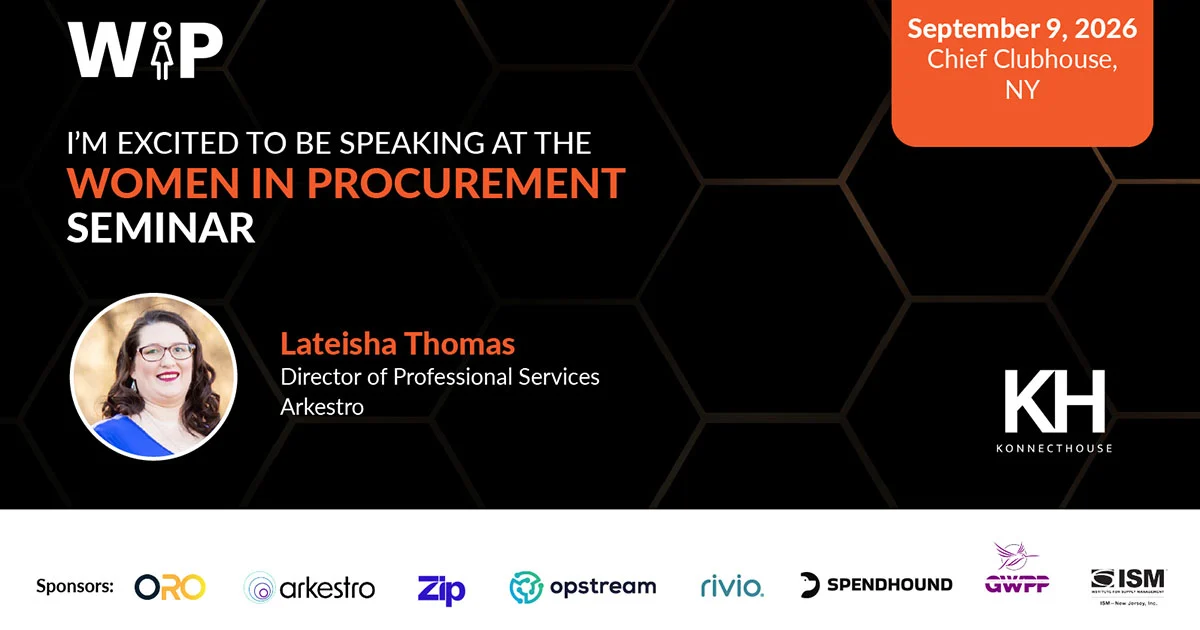
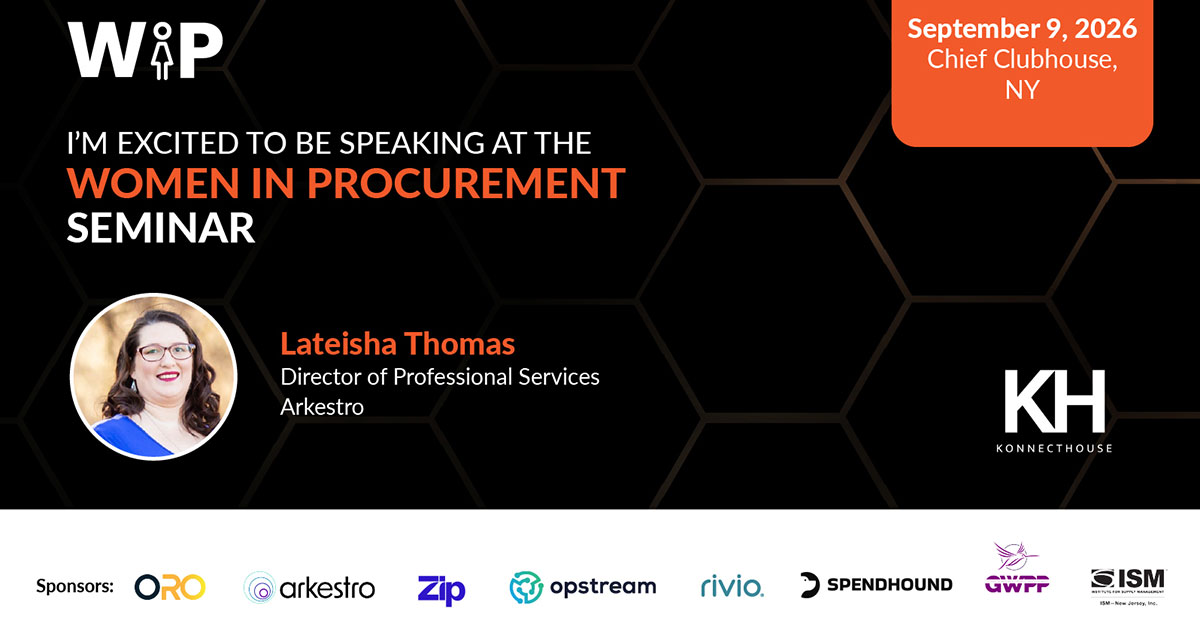
For leaders like Lateisha Thomas, Director of Professional Services at Arkestro, the challenge isn’t just getting new customers to adopt new technology. It’s ensuring teams trust it, understand it, and can act on it quickly and responsibly. We’re proud to share that Lateisha will be bringing that perspective to the stage at an upcoming Women in Procurement event. Here’s a look at the philosophy she’ll be bringing to the stage.
For Lateisha, “Live in 5” is less a deployment metric and more a leadership mindset. “‘Live in 5’ isn’t just about speed. It’s about confidence,” she explains. “It means we’re delivering meaningful value fast enough that teams can see impact immediately, build trust early, and iterate intelligently. From a leadership standpoint, it’s about removing friction, organizational, technical, and psychological, so progress feels tangible from day one.”
Speed can actually build trust when it’s paired with clarity. When teams see results quickly, skepticism turns into curiosity, and curiosity turns into adoption. The key, Lateisha says, is making sure people understand why decisions are being made, not just that they’re happening faster.
But moving quickly also carries risk, and she’s clear-eyed about that. “The biggest risk is misalignment: moving faster than people can understand or trust the system. We mitigate that by prioritizing communication and visibility. At Arkestro, transparency isn’t an afterthought. It’s embedded in how we deploy and explain our technology.”
Balancing urgency with ethical decision-making comes down to a simple principle: you operationalize thoughtfulness rather than sacrifice it. That means building guardrails into systems, defining clear accountability, and keeping humans in the decision loop. And it means bringing people into the process early. “People endorse what they help create,” she says. “Urgency doesn’t mean decisions happen to people. It means they happen with them, in a structured and scalable way.”
A decade-plus in procurement has given Lateisha a clear view of what makes AI adoption stick and what makes it stall. The answer, consistently, comes back to explainability.
“It’s not enough for the system to be right. It has to be explainable in a way that aligns with how customers already think about their business. When customer teams can see consistent patterns, understand why recommendations are made, and validate outcomes against their own expertise, trust begins to build. The goal isn’t blind adoption. It’s informed confidence, where the technology becomes a partner in decision-making, not a black box.”
Leadership plays a critical role in bridging the gap between technology and the customer’s day-to-day reality. As a technology leader, Lateisha sees her responsibility as making sure both her teams and her customers’ teams feel supported rather than disrupted. “That means creating an environment where questions are welcomed, insights are shared quickly, and learning happens in real time. Adoption accelerates when customer teams feel like they’re part of the journey, not just recipients of a new system.”
Speed and confidence aren’t in conflict when they’re managed well. “For customer teams, seeing value quickly builds momentum and reinforces that the technology works. It shifts the conversation from ‘Will this help us?’ to ‘How do we use this more?’ When we combine speed with education, transparency, and early wins, customer confidence grows naturally instead of being forced.”

Visibility starts with explainability. When deploying quickly, it’s critical that customer teams can understand how and why decisions are being made. That means ensuring recommendations are traceable, inputs are clear, and outcomes align with their business context.
“Transparency isn’t just about giving access to data,” Lateisha explains. “It’s about making the reasoning behind decisions easy to follow and trust.”
As AI adoption scales, she focuses on consistency and accessibility: clear communication, shared metrics, and strong feedback loops between Arkestro’s teams and their customers’ teams. “When transparency is built into the system, it scales alongside the technology.”
The business case for transparency is straightforward. Transparency reduces friction. When customer teams understand the ‘why’ behind decisions, they engage more quickly and with greater confidence. That shift from questioning the system to leveraging it is what accelerates adoption and ultimately drives ROI.
In high-velocity environments, ethical rigor can’t be treated as a final checkpoint. It has to be part of how systems are designed, deployed, and evaluated. “That includes clear governance, defined accountability, and ongoing monitoring. For customer teams, that creates confidence that decisions are not only fast, but responsible.”
Knowing when to slow down is just as important as knowing when to move. “‘Live in 5’ is about accelerating value, but not at the expense of trust or integrity. Leaders should pause when decisions have broader human or long-term impact. Knowing when to step back and evaluate the implications of a decision is just as important as knowing when to move quickly.”
On accountability, Lateisha is unambiguous: it stays with people. “AI plays a critical role in informing and optimizing decisions, but leaders and the customer teams using the technology own the outcomes. That clarity reinforces trust and ensures that technology is seen as an enabler, not a replacement for responsibility.”
Lateisha didn’t set out to lead. She was shaped into it, partly by great leaders and partly by their absence. “I’ve had the benefit of working for some incredible leaders and also experiencing leadership that fell short. Both shaped me. The great leaders created trust, gave context, and made a real difference in how I showed up and grew. The others showed me exactly what I didn’t want to replicate. That combination is what pushed me toward leadership.”
What the best leaders had in common, she found, wasn’t authority. It was clarity and connection. “The best leaders I worked with didn’t just tell me what to do. They helped me understand the bigger picture and how my work contributed to it. That clarity builds trust and drives better outcomes.” Equally important was approachability. “That human connection made a huge difference in how much I trusted them and how effectively I could do my job. I strive to lead the same way: accessible, transparent, and grounded in real relationships.”
Her perspective on speed and innovation has also evolved over time. “Early on, I saw speed and innovation as the goal. Over time, I’ve realized they’re really part of the journey, not the destination. Innovation for the sake of innovation can actually create friction if it’s not grounded in purpose. The real goal is to help people be more effective and successful. Speed and innovation are powerful tools to get there, but they only work when they’re aligned with trust, clarity, and meaningful outcomes.”
Speaking at a Women in Procurement event isn’t a departure from Lateisha’s day-to-day experience. In many ways, it’s a continuation of a challenge she’s navigated throughout her career.
“One of the most real challenges is being the only woman in the room. In those situations, your voice has to be strong and clear, because if it’s not, it can easily be overlooked.” She’s had to consciously unlearn communication habits common to women in professional environments. “We’re sometimes conditioned to soften our language, using words like ‘should,’ ‘suggest,’ or ‘try.’ I’ve had to consciously shift that, to be more direct and confident in how I communicate.”
Bias, she’s found, doesn’t always announce itself. “I’ve experienced people going around me to my male leader, even when I’m the one accountable. Establishing yourself as the leader in those situations takes persistence and consistency. It’s not just about proving capability. It’s about reinforcing it over time.”
Authentic leadership, to her, starts with people. “Performance and speed matter, especially in high-growth environments, but they’re not sustainable if people don’t feel seen, heard, and supported. When teams feel that level of trust and connection, they naturally operate with more ownership and urgency. That’s where speed actually comes from: not pressure, but alignment and belief.”
To other women navigating high-growth, high-expectation roles, her advice is direct: “Be intentional about how you show up. Don’t dilute your message. Be direct, be decisive, and trust your perspective. You don’t need to wait for permission to lead. Your perspective is valuable, and in fast-moving environments, it’s often exactly what’s needed.”
Having spent over a decade working with procurement systems, Lateisha has a clear reference point for what “good” looks like. “I haven’t seen another platform that delivers this level of value this fast, with such minimal effort required from the user. ‘Live in 5’ isn’t just a message. It’s something we see play out in real time. Customers are realizing outcomes almost immediately, and that kind of transformation is incredibly motivating to be a part of.”
As the company has grown, her role has evolved to focus heavily on repeatability and scale while still preserving the personalization that makes Arkestro’s partnerships successful. “A big part of my responsibility is ensuring my team can sustain that level of performance. That means being intentional about workload, protecting work-life balance, and avoiding burnout. Delivering value quickly shouldn’t come at the expense of the team delivering it.”
Arkestro’s customer onboarding approach is a strong example of all three pillars coming together. “We focus on delivering value early while maintaining full visibility into how results are being achieved. That combination, quick wins paired with transparency, builds trust very quickly. Customers aren’t just seeing outcomes. They understand how those outcomes are happening, which strengthens the partnership from the start.”
The culture that makes this possible is rooted in trust and ownership. “We hire people for their expertise and their ability to deliver, and then we give them the autonomy to do exactly that. When people feel ownership over their work and are supported in how they execute it, they show up at their best. It allows us to move quickly while staying aligned and accountable, because everyone is genuinely invested in the outcome.”
Lateisha describes her leadership style as grounded in clarity, trust, and empowerment. “In high-velocity environments, speed without direction creates chaos, and precision without autonomy slows everything down. My role is to set a clear vision, make sure my team understands the priorities, the context, and the ‘why’ behind what we’re doing, then give them the space to execute.”
Empowering teams to act decisively while staying aligned starts with making values actionable. “It’s not enough to define principles. You have to translate them into how work actually gets done. When teams have that clarity, they don’t need to wait for direction. They can move forward confidently.” She also emphasizes genuine care as a driver of performance. “When teams know their leader genuinely cares about them as individuals, not just output, they show up differently. They collaborate more, take smarter risks, and move faster, because they’re aligned both professionally and personally.”
One of the hardest parts of leading in a fast-moving environment, she says, is resisting the pull to optimize everything for the short term. “There are moments where you have to step back and ask: what is this decision going to mean six months or a year from now? In some cases, it means investing more upfront, adding resources to prevent burnout, slowing down to ensure alignment, or prioritizing transparency so trust isn’t compromised. Those decisions aren’t always easy, especially when they may impact short-term metrics. But sustainable success comes from making choices that support both the business and the people behind it.”
Looking ahead, Lateisha sees AI moving from tool to teammate, embedded in everyday decisions, expected to be transparent, and evaluated on measurable outcomes. There’s also a mindset shift happening. Teams are starting to embrace AI as a way to enhance the mundane parts of their work, rather than fear it. And that unlocks more time for strategic thinking and higher-value contributions.
The habits that will define the next generation of leaders aren’t just technical. “Adaptability, clarity, and a strong bias toward action are critical, but just as important is creating a safe environment where teams can try new things and fail without fear. Strong communication and empathy also matter: understanding your team, recognizing their strengths, and leading by example are what keep everyone aligned while moving quickly.”
The leaders who stand out, she believes, will be the ones who can translate complexity into clarity and build trust fast. “Empathy and communication are becoming even more important: understanding how individuals operate, recognizing their strengths, and empowering them to do their best work. The leaders who stand out will be the ones who can guide teams through change, create space for innovation, and model the behaviors they want to see.”
We’re proud to have Lateisha representing Arkestro on the Women in Procurement stage. Her perspective on trust, transparency, and technology-driven leadership is exactly the kind of voice this industry needs more of.
Stay tuned for more details on her session, and if you’re attending, make sure to catch her talk. Seats are limited. If you haven’t saved your spot, book here.
No spam, just relevant news, tips, and tricks. You can unsubscribe anytime.